
Vietnam Post Office: The Ultimate Guide to Sending Mail & Parcels (2025)
In a world of instant messages and digital check-ins, there’s a timeless magic to sending a physical piece of your journey back home. Whether it’s the simple joy of a friend receiving a postcard covered in Vietnamese stamps or the practical need to ship home unique souvenirs you’ve collected, connecting across distances remains a core part of the travel experience. The historic gateway for these tangible memories is the Vietnam Post Office, or VNPost, the country’s official postal service. This sprawling network is the backbone of national communication, reliably linking every town and village to the wider world. Yet, VNPost is more than just a place to buy stamps; it’s a living institution where historic, colonial-era buildings still serve bustling crowds, even as modern competitors offer a different range of services. For travelers looking to explore these historic sites and more, finding a comfortable and central base is key, which is why we at Little Charm Hostel are happy to share these insights.
1. The History of Vietnam’s Postal Service
 The story of Vietnam’s postal service is a direct reflection of the nation’s own complex history, beginning as a tool of colonial power before transforming into a symbol of national unity.
The roots of the modern postal system were planted during the French colonial era in the late 19th century. It was established as a vital instrument for administering their vast Indochinese territory, connecting distant outposts, and projecting a sense of permanence and authority. This period left behind an incredible architectural legacy, none more famous than the Saigon Central Post Office in what is now Ho Chi Minh City. Constructed between 1886 and 1891, its stunning design features grand arches and a magnificent domed ceiling that feels more like a classic European railway station than a post office. While popularly attributed to Gustave Eiffel, the masterpiece was actually designed by architect Alfred Foulhoux, and it remains a breathtaking symbol of the era.
Following Vietnam’s independence and reunification, the postal service was nationalized and evolved significantly, eventually being restructured into the modern corporation we know today as VNPost, a pillar of the country’s infrastructure.
2. Two Iconic Vietnam Post Offices Every Traveler Should Visit
 Beyond their practical use, some of Vietnam’s post offices are destinations in themselves, offering a stunning look into the country’s architectural and cultural evolution. Two buildings, in particular, stand out and should be on every traveler’s itinerary.
2.1. The Saigon Central Post Office (Ho Chi Minh City)
The undisputed star is the Saigon Central Post Office in Ho Chi Minh City. Stepping inside is like walking back in time to a grand 19th-century European railway station. You are immediately greeted by a grand, cavernous space with a high, arched ceiling supported by elegant green ironwork. Take a moment to admire the beautifully preserved antique telephone booths and the two enormous historical maps painted on the walls, depicting the telegraph lines of the region in 1892. Despite being a fully functional post office bustling with activity, its magnificent, French colonial historic ambiance makes it one of the city’s most beloved attractions.
- Address: 2 Cong Xa Paris, Ben Nghe, District 1, Ho Chi Minh City.
- Opening Hours: 7:00 AM – 7:00 PM, daily.
- Ticket Price: Free entry.
2.2. The Hanoi Post Office (Buu Dien Ha Noi)
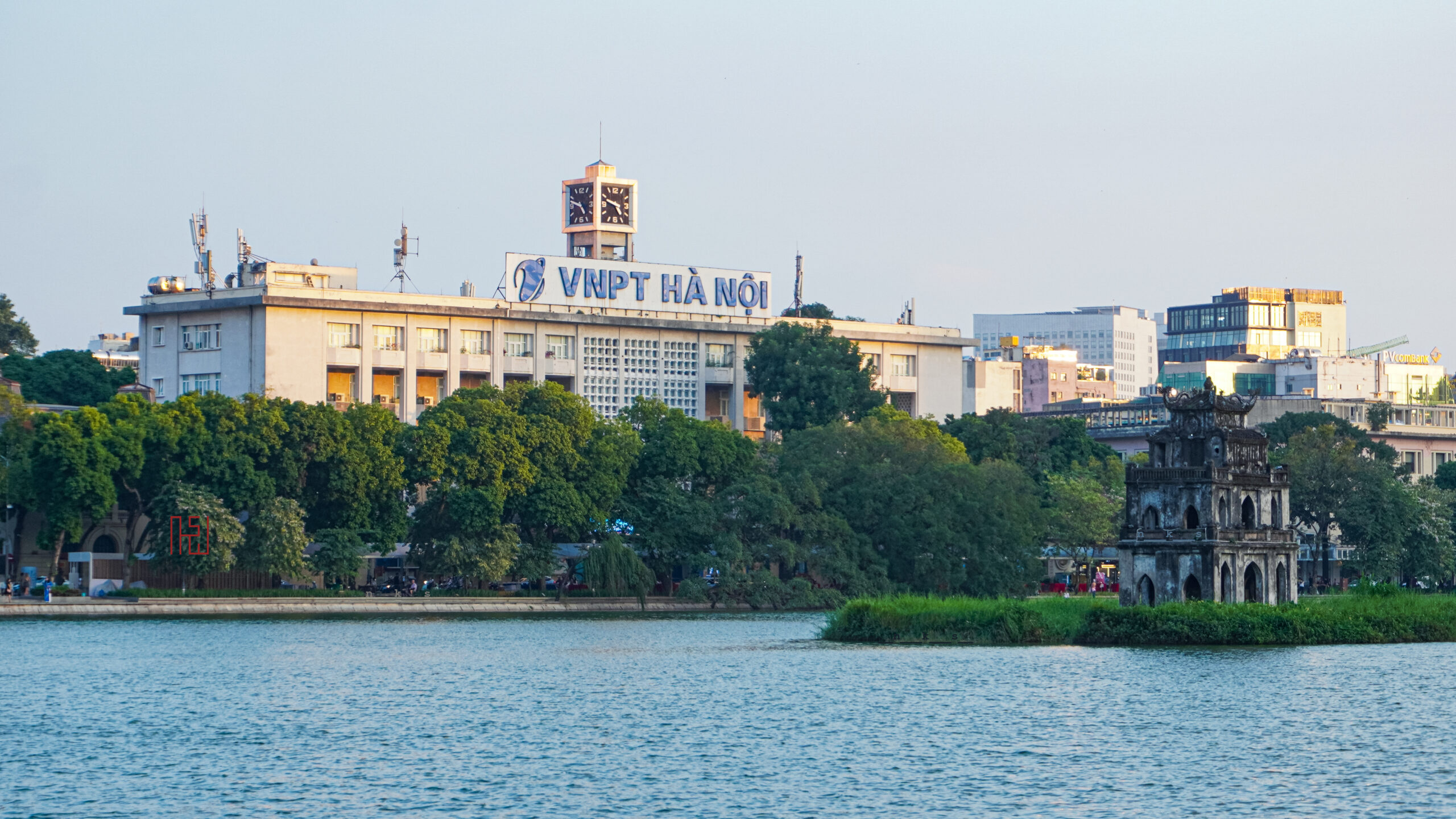
In the nation’s capital, the Hanoi Post Office (or Buu Dien Ha Noi) offers a completely different, yet equally significant, experience. Located right on the edge of the iconic Hoan Kiem Lake, this building showcases a more modern, functionalist architectural style from the 1970s. While it lacks the colonial romance of its southern counterpart, its prime location in the heart of Hanoi makes it a central landmark and a constant hub of activity, especially during the weekends when the surrounding streets become pedestrian-only zones. It represents a different chapter in Vietnam’s history—one of post-independence rebuilding and forward momentum.
- Address: 75 Dinh Tien Hoang, Hoan Kiem District, Hanoi.
- Opening Hours: 7:00 AM – 9:00 PM, daily.
- Ticket Price: Free entry.
3. A Practical Guide to Using VNPost (The National Post)
 While the grand post offices are sights to behold, using VNPost for its intended purpose is a straightforward process. Here’s how to navigate sending everything from a simple postcard to a box of treasured souvenirs, based on the most current information for 2025.
3.1. Sending Postcards and Letters Like a Pro
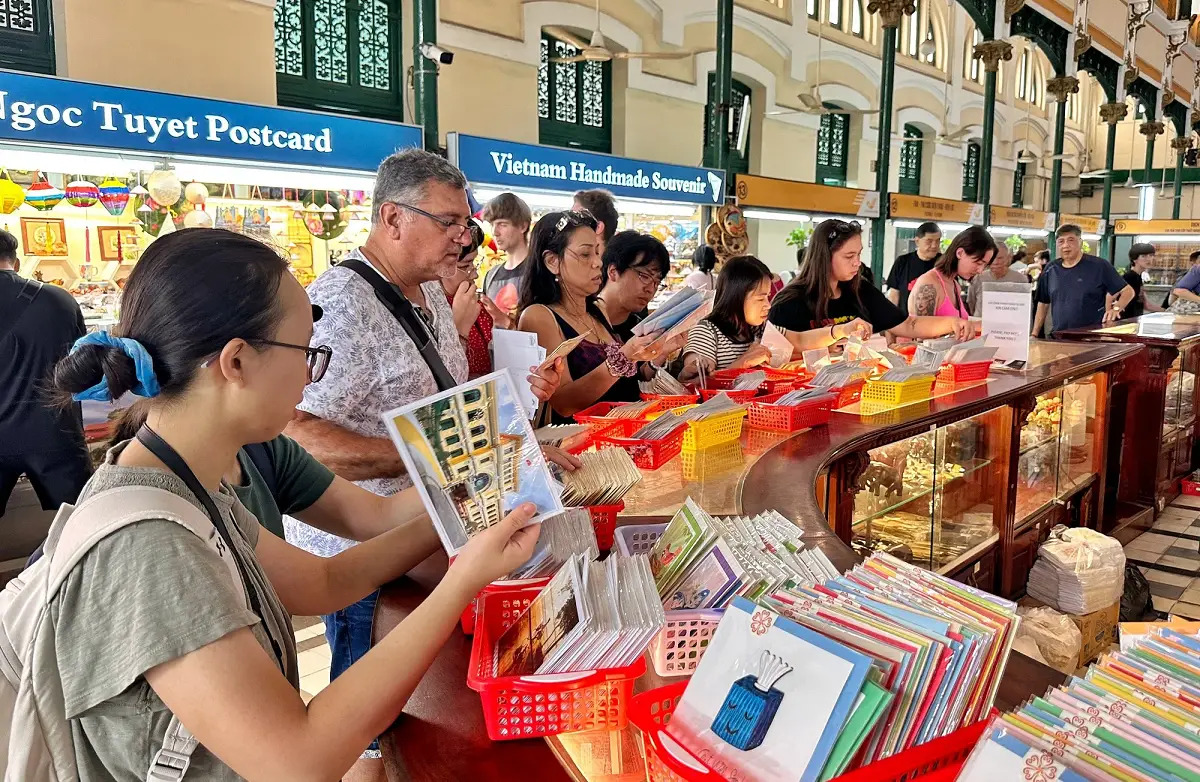
Sending a postcard from Vietnam is a classic traveler’s ritual and a wonderfully simple process. You can find beautiful postcards at countless souvenir shops and street stalls, but it is essential to buy the stamps, known in Vietnamese as tem, directly from an official post office counter. This ensures you pay the correct, current international rate. As of 2025, a stamp for a standard postcard to most international destinations typically costs around 15,000 VND. Once stamped, you can drop it in any of the bright yellow mailboxes marked with “Buu Dien“. Just be patient—standard airmail can take anywhere from two to four weeks to reach Europe or North America, often arriving as a perfect, delayed greeting long after you’ve returned home.
3.2. Shipping Parcels and Souvenirs Home
For sending back all those conical hats, lanterns, or ceramics, VNPost is a reliable and highly cost-effective option compared to international couriers. The process is a little more involved but still easy to manage. A key tip is to bring your items to the post office unpacked, as the staff will need to inspect the contents before you seal the box. Conveniently, you can buy sturdy boxes and packing supplies directly at the counter. You will need to fill out a customs declaration form, listing the contents and their estimated value; clarity here helps prevent delays. You will generally be offered two main international services:
- Standard Mail: This is the most budget-friendly choice, with options for both sea and air. Sea freight is extremely slow (2-3 months), while standard airmail is faster (3-5 weeks) but offers limited tracking.
- EMS (Express Mail Service): For anything valuable or time-sensitive, this is the service to choose. EMS is significantly faster, typically delivering within 7-10 business days to major destinations, and provides a tracking number for your peace of mind.
4. Beyond the Post Office: Comparing VNPost with Other Couriers
 While VNPost is the historic heart of the nation’s mail system, the logistics landscape in modern Vietnam is highly competitive. For sending parcels, you have several excellent private couriers to choose from, each with its own strengths. Understanding the key players will help you make the best choice for your budget and timeline.
4.1. Viettel Post: The Modern Local Giant
A formidable competitor to VNPost is Viettel Post, operated by the massive Viettel Group, a state-owned telecommunications company. Leveraging their nationwide network, they offer a modern, tech-forward approach to logistics that has become incredibly popular. This service is an excellent choice for domestic and regional shipping, often boasting competitive prices and faster delivery times than standard mail. Expect a user-friendly app for booking shipments and tracking parcels in real-time, plus a vast network of drop-off locations that make it remarkably convenient.
4.2. International Players: DHL, FedEx, and UPS
For those prioritizing speed and security above all else, the global giants DHL, FedEx, and UPS have a strong and reliable presence in Vietnam’s major cities like Hanoi and Ho Chi Minh City. These couriers are the gold standard for sending urgent documents, high-value items, or time-sensitive business shipments. The service is premium, with detailed, point-to-point international tracking and guaranteed delivery windows that provide maximum peace of mind. Be prepared, however, for this premium service to come at a significantly higher cost than local options.
4.3 Quick Comparison: Which Service is Right for You?
Choosing the right service depends entirely on your priorities. Here’s a simple breakdown:
- For Nostalgia & Postcards: VNPost is your only and best choice for that classic mail experience.
- For Budget International Parcels (Non-Urgent): VNPost‘s standard international service is usually the most economical option.
- For a Balance of Speed & Cost: Compare quotes between VNPost‘s EMS service and Viettel Post, as their prices and delivery times are often competitive.
-
For Urgent or High-Value Items: Go directly with DHL, FedEx, or UPS. The extra cost is worth the security and speed.
5. 5 Essential Tips for a Smooth Shipping Experience in Vietnam
 Navigating any country’s postal system can have its quirks. After more than a decade of sending things to and from Vietnam, I’ve learned that following a few simple rules makes the process completely stress-free, no matter which service you choose. Here are my top five essential tips for a smooth experience.
- Go to the Main Branches While convenient, smaller local post offices may not have staff experienced with complex international shipments. For the smoothest process, especially if you need help with forms, always head to the central post office in major cities like Hanoi or Ho Chi Minh City. They have dedicated counters for parcels and EMS and a higher chance of having English-speaking staff available to assist you.
- Write Addresses Clearly and Completely This sounds obvious, but it’s crucial for avoiding delays. Use a clear, legible script and write the destination country’s name in bold, capital letters (e.g., USA, AUSTRALIA). A pro tip is to always include the recipient’s local phone number if you have it—it can be a lifesaver for the delivery driver at the final destination.
- Always Have Your Passport Ready You cannot send an international parcel from Vietnam anonymously. Whether you are using VNPost, Viettel Post, or DHL, you will be required by law to show your passport as proof of identity when filling out the mandatory customs and shipping forms. Don’t leave your hotel without it.
- Prepare for a Content Inspection Do not bring a perfectly sealed and taped-up box to the counter. Postal and courier staff in Vietnam are required to inspect the contents of your parcel before it is sealed for security and customs purposes. The best strategy is to bring your items in an open box or bag and do the final packing and taping at the post office after the quick inspection is complete.
-
Know the Prohibited Items List Before you even think about packing, be aware of what you can’t ship. Common restricted items for international airmail include flammable liquids (perfume, nail polish), aerosols, lighters, and loose lithium batteries. If you’re unsure about an item, it’s always best to ask at the counter or check the courier’s official website beforehand to avoid having your package rejected.
6. Sending a Piece of Vietnam Home: A Final Thought
 From the timeless grandeur of the Saigon Central Post Office under VNPost‘s care to the modern efficiency of couriers like Viettel Post, Vietnam offers a complete spectrum of services to connect your journey with the world. Whether you are sending a simple postcard or a box full of precious souvenirs, you will find a reliable and suitable option for any need and budget. Shipping a package here is more than just a task on a travel checklist; it’s a way of sharing a tangible piece of your adventure, a reflection of Vietnam itself—a country that deeply respects its rich history while rapidly embracing the future. I truly hope you take a moment to send a message home the old-fashioned way or carefully wrap up a local handicraft to ship to a loved one. It’s in these small connections that the rich and vibrant culture of this incredible country is truly shared, creating a memory that lasts long after you’ve returned.