
Wandering through the vibrant landscapes of Vietnam, from the terraced rice fields of the north to the bustling markets of the south, one is immediately struck by a dazzling mosaic of colors and patterns worn by its people. This visual feast is the heart of the Vietnamese cultural tapestry, woven by the country’s 54 ethnic groups. Their traditional clothing is far more than just a way to dress; this ethnic attire is a living language, a story told in every thread, pattern, and hue. Each garment is a proud declaration of identity, a chronicle of history, and a sacred expression of spiritual beliefs. This journey through textiles will take us from the intricate embroidery of the northern mountains down to the unique weaves of the Central Highlands, exploring the soul of a nation stitched into its fabrics. For travelers eager to dive deep into Hanoi’s rich culture, Little Charm Hostel serves as an excellent starting point for your adventure.
1. The Ao Dai: An Enduring Symbol of Vietnamese Grace
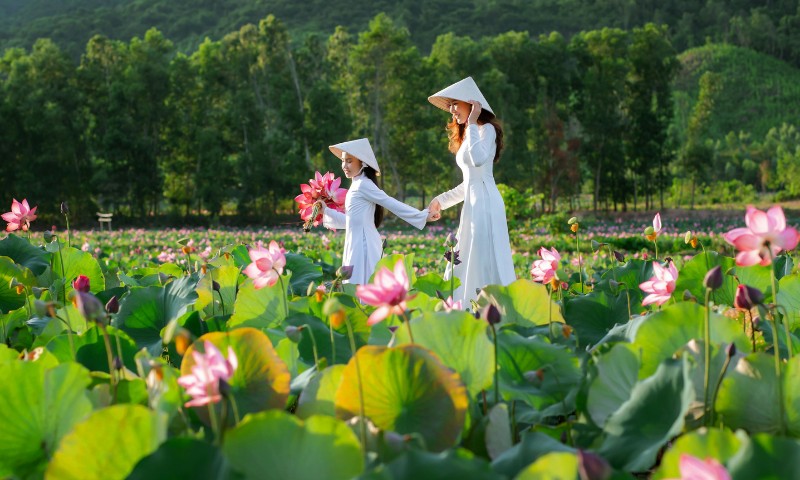 The Ao Dai is unequivocally the most recognized and celebrated garment of Vietnam, an emblem of national pride that radiates timeless elegance and gentle allure. Unlike the intricate and region-specific attire of the country’s ethnic minorities, the Ao Dai transcends geography and social lines to stand as a unifying symbol of Vietnamese identity. Its story is not just one of fashion, but of historical evolution, cultural resilience, and the very spirit of the Vietnamese people. Worn for centuries in various forms, this national dress has gracefully adapted to the currents of history, yet it has never lost its core essence, representing a sophisticated beauty that is distinctly Vietnamese. From the grand ceremonies in Hanoi to the daily life in the Mekong Delta, the silhouette of the Ao Dai is an ever-present reminder of the nation’s rich heritage.
1.1. A History of Transformation
The origins of the modern Ao Dai can be traced back to the 18th century during the Nguyen Dynasty, which had its imperial capital in Hue. It was here that Lord Vu Vuong decreed a new form of dress to distinguish his subjects. This early version, known as the Ao Ngu Than or five-paneled aristocratic tunic, was a looser, more modest garment worn by both men and women of the court. However, the Ao Dai as we know it today is largely a product of the 20th century. During the 1930s, inspired by a wave of modernization and Western stylistic influences, artists and designers in Hanoi began to reimagine the garment. A Hanoian artist named Cat Tuong, also known as Le Mur, famously redesigned the tunic to be more form-fitting, raising the waistline, slimming the sleeves, and creating the sleek, graceful silhouette that accentuates the wearer’s figure. This modernized version quickly gained popularity among the urban elite, transforming the Ao Dai from a traditional costume into a symbol of modern Vietnamese femininity and sophistication, a trend that soon spread to other major cities like Ho Chi Minh City.
1.2. Contemporary Significance and Design
In contemporary Vietnam, the Ao Dai remains a cherished and vital part of the nation’s culture. Its design is a masterpiece of subtlety and balance; the long, form-fitting tunic flows over wide-legged silk trousers, known as quần, creating a look that is both modest and alluring. The tunic is high-collared and fastened with small buttons from the neck down the shoulder and side, splitting into two panels, a front and a back, at the waist. This clever construction allows for fluid movement while maintaining a dignified and elegant posture. While it is no longer daily wear for most, the Ao Dai is reserved for significant occasions. It is the proud uniform of female high school students across the country, their pure white garments symbolizing youthful innocence. It’s also worn by flight attendants, hotel staff, and government officials for formal events. For the Tet holiday (Lunar New Year), weddings, and festivals, Vietnamese women don Ao Dai in a vibrant array of colors and fabrics, from luxurious silk to intricately embroidered brocade. The color itself often carries meaning: young girls wear white, unmarried women prefer soft pastels, and married women often choose richer, deeper tones. Ultimately, the Ao Dai is more than clothing; it is a statement of cultural identity and a living piece of Vietnamese heritage.
2. The Highlands in Bloom: Attire of Northern Ethnic Groups
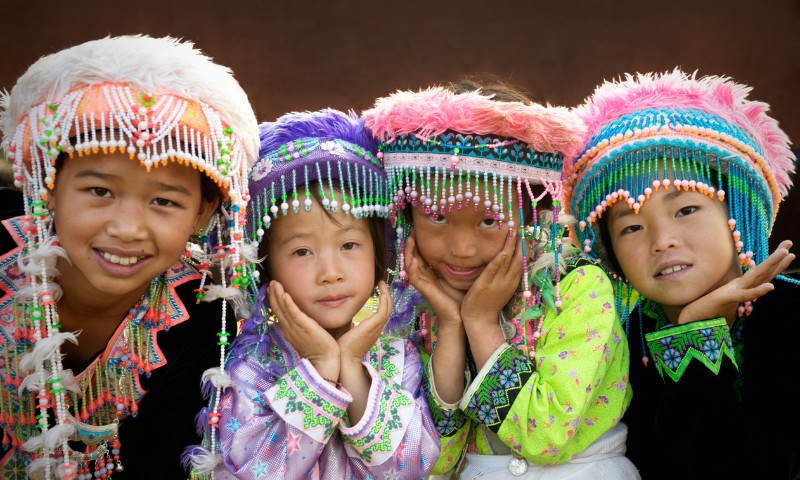 Venturing into the mist-shrouded mountains of Northern Vietnam, particularly in provinces like Ha Giang, Lao Cai, and Yen Bai, is like stepping into a living museum of textile art. Here, far from the urban bustle, the traditional attire of the region’s diverse ethnic groups paints the landscape with breathtaking color and intricate detail. The clothing worn in these highlands is not merely for function; it is a vibrant narrative, a testament to ancestral skills, and a proud declaration of cultural identity. Each stitch tells a story, and every pattern holds a deep-seated meaning, connecting the wearer to their community, their history, and the natural world around them. Among the most visually stunning are the garments of the H’mong and Red Dao peoples, whose masterful craftsmanship is a cornerstone of their cultural heritage.
2.1. The H’mong People’s Story Cloth
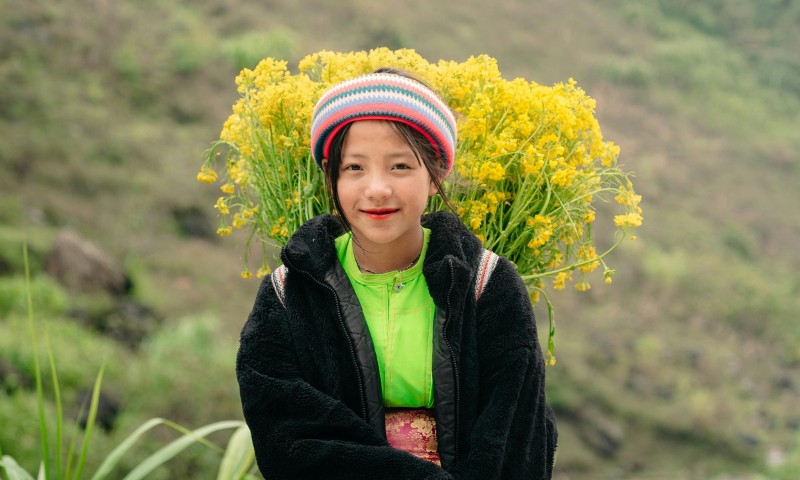
The H’mong are renowned for their incredible skill in textile production, a process that begins with the cultivation of hemp. Women transform the plant’s fibers into remarkably durable cloth, which then becomes the canvas for their artistry. The most recognizable garment is the pleated skirt, often seen on the Flower H’mong women around areas like Sapa. These skirts are masterpieces of technique, featuring sections of intricate, multi-colored cross-stitch embroidery, appliquéd fabric, and panels of hand-drawn batik. The batik process involves using beeswax to draw complex geometric and symbolic patterns onto the hemp cloth before dipping it in deep indigo dye; the wax resists the dye, revealing the stunning white patterns once it’s boiled off. These patterns are a form of “story cloth,” depicting everything from family history and folklore to the mountains and animals of their environment. This is complemented by vibrant blouses, leggings, and heavy silver jewelry, especially ornate necklaces and bracelets, which are considered a sign of wealth and serve to ward off evil spirits. The entire outfit is a dazzling display of color and skill, making H’mong women stand out in any mountain market.
2.2. The Red Dao’s Striking Headdress and Silver
The Red Dao people, primarily residing in the mountainous regions of Northern Vietnam, are immediately identifiable by their striking traditional dress. Their most distinctive feature is the women’s elaborate headdress. While the exact style varies, it is typically a large, triangular red turban, often decorated with silver coins, beads, and red tassels that frame the face. The vibrant red color is believed to bring good fortune and prosperity. The rest of their attire is just as impressive, consisting of a long tunic and trousers made from cotton that has been dyed a deep, shimmering indigo. What truly sets their clothing apart is the exceptionally fine and dense embroidery that adorns the trousers, lapels, and cuffs. Unlike the appliqué of the H’mong, the Red Dao focus on geometric patterns stitched with red, white, and yellow threads, a painstaking process that can take years to complete for a single pair of trousers. Furthermore, their garments are heavily embellished with silver, including coins, bells, and chains sewn directly onto the fabric, creating a beautiful jingling sound as they walk. This use of silver is not just for decoration but is a symbol of the family’s wealth and social standing.
3. Weaving the Central Highlands: The Textiles of the Ede and Bahnar
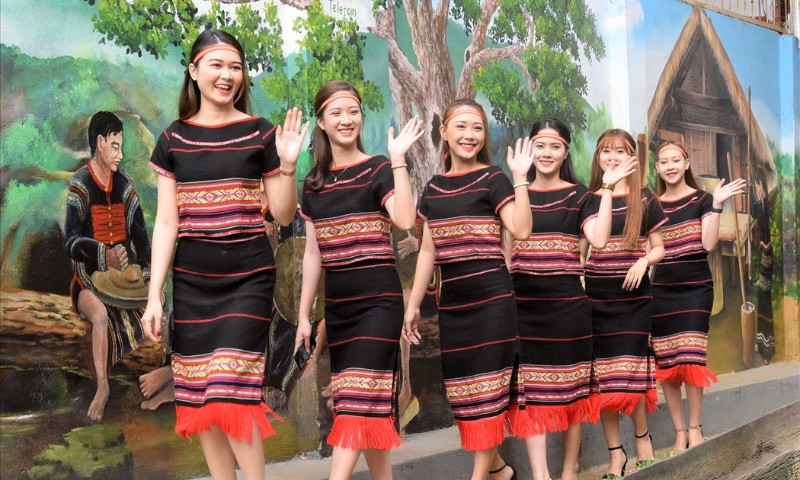
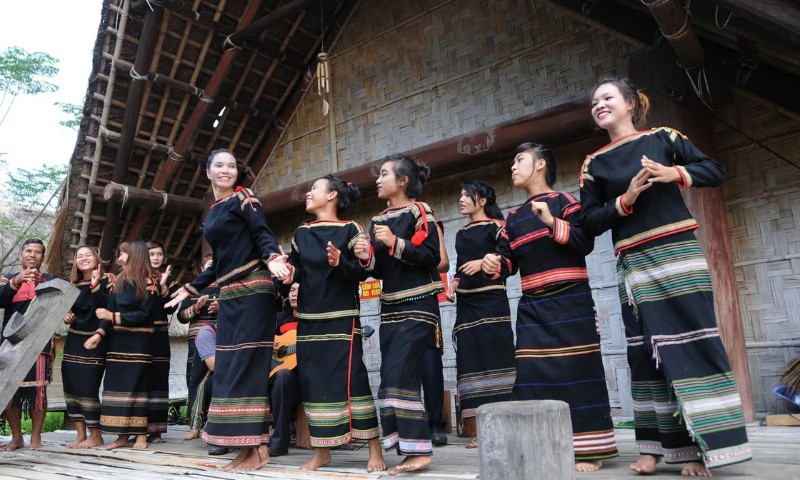 Journeying south from the northern mountains into the red-earth plateaus of the Central Highlands of Vietnam reveals a completely different cultural and aesthetic landscape. In provinces like Dak Lak, Gia Lai, and Kon Tum, the air is thick with the scent of coffee and the sounds of gongs. Here, the traditional attire of the local ethnic groups, such as the Ede and Bahnar, reflects a deep connection to the earth and a mastery of loom weaving. Their textiles are characterized by a more stoic and powerful elegance, favoring deep indigo dyes and bold geometric patterns over the kaleidoscopic embroidery of the north. The clothing here is not just worn; it is woven with the stories of the community, the spirits of the forest, and the legacy of a proud cultural heritage.
3.1. The Ede People’s Indigo Elegance
The Ede people, a matriarchal society primarily found in Dak Lak province, have a distinctive and sophisticated style of dress. The foundation of their traditional attire is a deep, almost black, indigo dye, which creates a dramatic canvas for their intricate patterns. For women, the primary garment is a long, tube-like wrap-around skirt, or sarong, that extends from the chest to the ankles. While the main body of the skirt is plain, the hems are adorned with stunning, finely detailed bands of woven patterns. These motifs, typically in red, white, and sometimes yellow, are symbolic, representing elements like plants, animals, and household objects. A simple, sleeveless top completes the outfit. Men traditionally wear a dark indigo loincloth, similarly decorated at the ends. The skill of an Ede weaver is judged by the complexity and precision of these patterned borders, which signify the wealth and status of the wearer’s family. This understated elegance is often complemented by striking accessories, including heavy brass or silver bracelets, beaded necklaces, and large ivory earrings.
3.2. The Bahnar’s Backstrap Loom Legacy
Living in the provinces of Gia Lai and Kon Tum, the Bahnar people are celebrated masters of the backstrap loom, one of the oldest forms of weaving in the world. With this simple yet effective tool, the weaver uses her own body to create tension on the warp threads, making her an integral part of the loom itself. This intimate connection between artisan and craft results in textiles that are imbued with a unique character and strength. Bahnar clothing is known for its bold geometric patterns and linear designs, often rendered in a striking palette of black, red, and white. The men’s loincloth is a particularly important garment, often featuring intricate motifs that represent spiritual beliefs and the natural world. Women wear a wrap-around skirt and a sleeveless top, both richly decorated with woven patterns. Unlike the fine, detailed work of the Ede, Bahnar textiles often have a more rustic and powerful feel, reflecting the rugged beauty of the Central Highlands. This enduring weaving tradition is a vital part of the Bahnar’s cultural identity, passed down through generations and preserving their ancestral stories in thread.
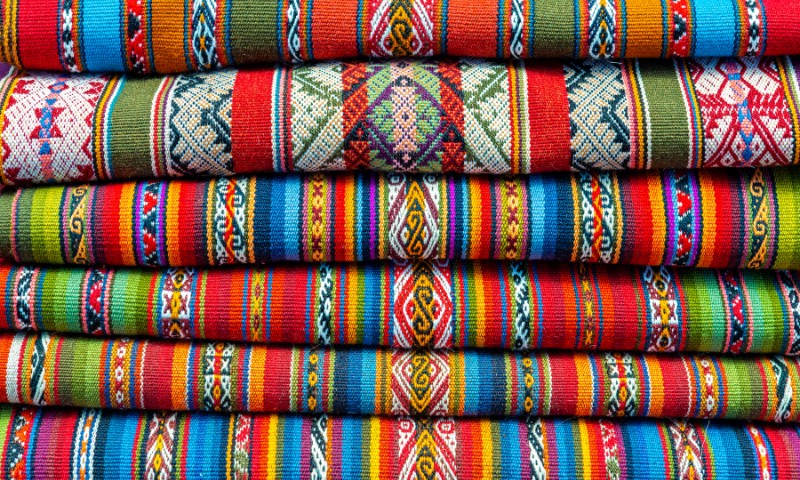 The breathtaking beauty of Vietnam’s ethnic attire is rooted in a profound connection between people and their environment. Long before synthetic fabrics and chemical dyes were available, these communities perfected the art of creating extraordinary textiles from the world around them. This deep well of indigenous knowledge, passed down from mother to daughter for countless generations, represents a sustainable and intimate form of craftsmanship. The entire process, from cultivating plants for fiber and color to weaving intricate symbolic motifs, is a testament to the patience, skill, and rich cultural heritage of these ethnic groups. Understanding these techniques reveals that each garment is not just an object of beauty, but a culmination of ancestral wisdom and hard work.
 In an age of fast fashion and globalization, the time-honored traditional crafts of Vietnam’s ethnic communities face unprecedented challenges. The allure of urban employment can draw the younger generation away from the villages, threatening the continuity of skills passed down for centuries. Furthermore, the market is often flooded with cheap, machine-made imitations that undercut the true value of handcrafted textiles. Yet, despite these pressures, there is a powerful and growing movement across Vietnam dedicated to the preservation and celebration of this invaluable cultural heritage, ensuring that these intricate traditions not only survive but also thrive in the 21st century.
 From the flowing elegance of the Ao Dai gracing the streets of Hanoi to the riotous colors of a Flower H’mong market in the mountains of Sapa, the traditional clothing of Vietnam is a profound and moving testament to the nation’s soul. As we’ve journeyed through this vibrant world of textiles, we’ve seen that these garments are far more than simple articles of clothing. They are history books without pages, libraries of ancestral knowledge, and declarations of identity woven with pride and painstaking skill. Each piece is a microcosm of a unique culture, reflecting a deep harmony with nature and a resilient spirit that has endured through centuries of change. This remarkable diversity is the true treasure of Vietnam’s cultural heritage.